

🌱 The Definitive Master Guide to Tissue Culture (TC) Acclimation
A SCIENTIFIC ROADMAP TO SUSTAINING MICROPROPAGATION SPECIMENS
Welcome to the cutting edge of the rare plant hobby! Buying Plant Tissue Culture (TC) is one of the most rewarding, cost-effective ways to build a collection of highly sought-after, exotic botanicals. However, TC plants are not like regular houseplants. They are essentially "infants" born in a sterile laboratory bubble. Moving them from their perfect, germ-free lab environment into the real world requires a delicate, step-by-step process called acclimation (or deflasking).
What is Tissue Culture Acclimation?
Tissue Culture (TC) Acclimation (also known as deflasking) is the progressive transition of laboratory-grown plantlets (in vitro) into standard potting media (ex vitro) and dry household room air. This gradual process trains baby plantlets to develop a waxy cuticle layer, adapt stomatal breathing pores, and establish functional root systems.
⚠️ Shop Policy & Responsibility Reminder
Acclimating tissue culture plants requires patience, strict hygiene, and dedication. Once the sterile seal on your TC vessel is broken, you assume all responsibility for the plant's acclimation journey. Please read this entire guide completely before opening your plant container!
The Science: Why Do TC Plants Need Acclimating?
Inside their sterile lab flask (in vitro), the environment is 100% humid, rich in sugars and hormones, and entirely free of pathogens. Because of this luxury lifestyle, the plant currently lacks three critical survival tools:
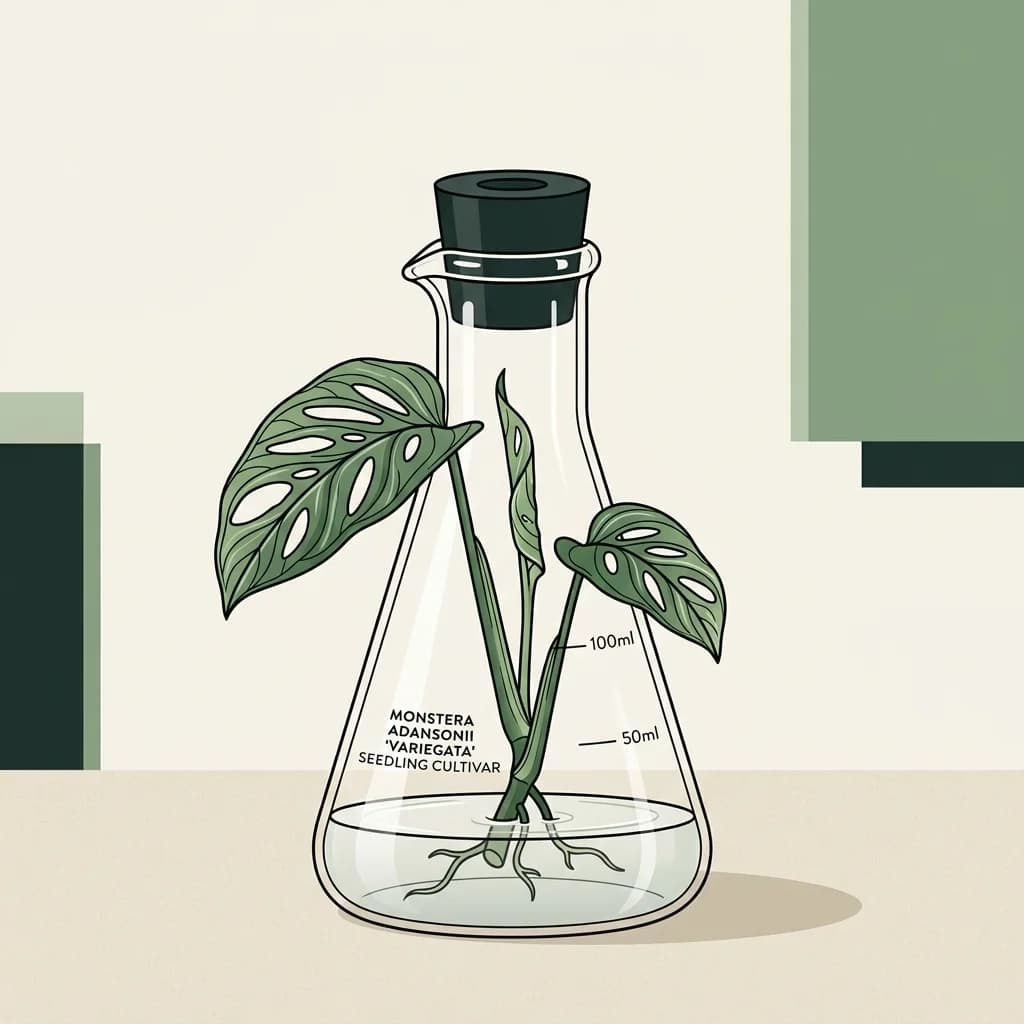
No Waxy Cuticle
Real-world plants have a waxy coating on their leaves (the cuticle) to lock in moisture. TC plants lack this coating entirely, meaning dry room air will immediately dehydrate them.
Lazy Stomata
Stomata are microscopic pores that regulate breathing. Living inside 100% laboratory humidity, their stomata are permanently locked open, and need to be retrained to close.
Agar Water Roots
Fragile gel roots are adapted to sugar absorption. They lack microscopic root hairs and cannot pull water from solid media, making them highly vulnerable to rot.
100% Pathogen-Free & Pampered
Inside the sterile culture vessel, the baby plant lives on a literal cloud. It enjoys a constant buffet of liquid sugars, growth hormones, and 100% humidity.
- 🟢 100% humidity locks stomata wide open
- 🟢 Zero wind means no protective waxy cuticle
- 🟢 Sugar gel roots have no root hairs
The Harsh Outside Environment
Once deflasked, the plantlet faces ambient dry drafts, soil pathogens, and hot grow lights. It is completely defenseless unless we retrain it slowly.
- 🔴 Dry ambient air will quickly dehydrate leaves
- 🔴 Mold spores and soil bacteria await roots
- 🔴 Stomata must learn to close to retain moisture
Anatomical Divergence Between In Vitro and Ex Vitro Foliage
This visual illustrates the profound structural deficits of plants grown in laboratory settings compared to standard houseplants. Because in vitro plants are cultivated in highly controlled, 100% humidity environments, they do not develop protective mechanisms like a waxy epicuticular layer, and their stomata (the pores used for gas exchange) are malformed and remain perpetually open.
The chart highlights these specific morphological weaknesses to explain exactly why a lab-grown leaf will instantly dry out and die if exposed to ambient room air without a gradual acclimatization period.
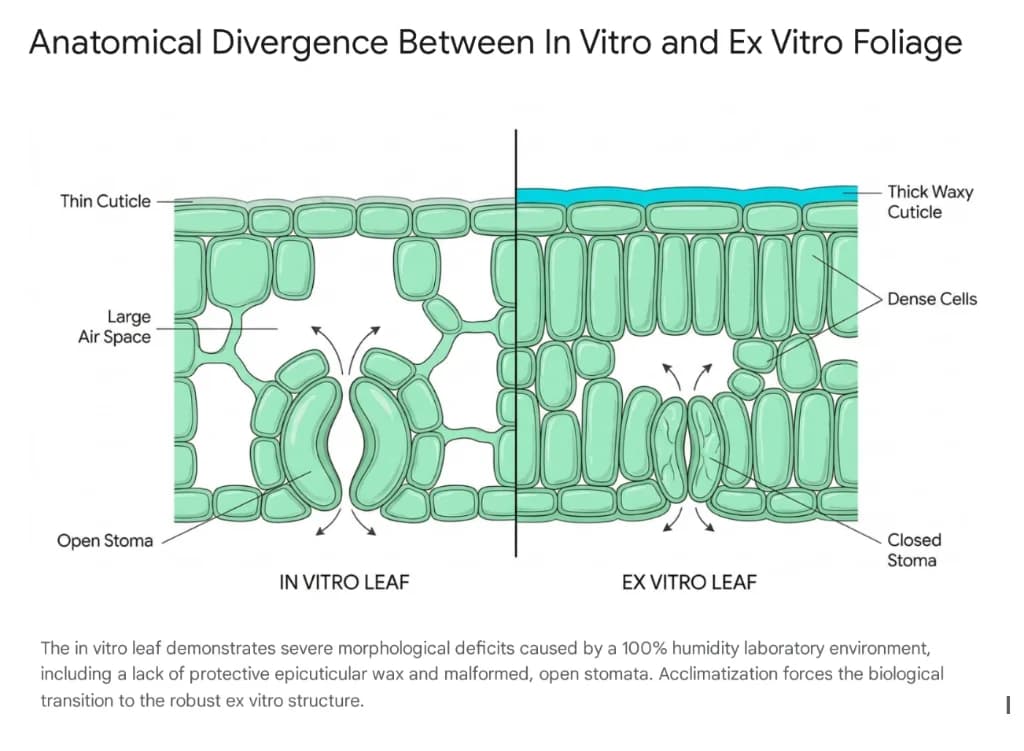
Cross-section comparison of an unacclimated lab-grown leaf (left) vs. a hardened, robust ex vitro leaf (right).
Interactive Microscopic Stomata Simulator
Click the humidity levels below to see how microscopic breathing pores react. Tissue culture plants must be trained over weeks to perform this vital reflex.
Stomata Open (Turgid): The guard cells absorb water, swell, and curve outward. The pore opens wide to let in carbon dioxide. In 100% lab humidity, this is fine, but in home air, dry currents would instantly escape, dehydrating the plantlet.
Stomata Closed (Flaccid): Guard cells lose pressure and collapse straight together, sealing the pore. This crucial defense locks in moisture. Hardening off slowly trains these lazy pores to close when dry.
The Primary Goal
The acclimation process is a 4-to-8-week “bootcamp” where we keep the plantlet in a high-humidity microclimate while slowly teaching it to build its waxy cuticle, regulate its stomata, and grow strong roots without overwhelming its delicate immune system.
What to Do When Your Package Arrives? (Pre-Acclimation)
The Resting Period
If the agar gel is intact, DO NOT OPEN THE FLASK! Place the sealed vessel in a warm room (75°F - 80°F) under gentle, indirect grow lighting for 24 to 48 hours. This allows the specimen to recover from shipping temperature shocks before facing physical deflasking.
The Exception (Scrambled Gel)
If shipping was rough and the agar gel is completely smashed, scrambled, or coating the leaves, skip the resting period. The sugars in the gel will suffocate leaves if left in the dark. Acclimate immediately.
Checking for Contam: Look closely at the gel. If you see fuzzy white mold or strange colored bacterial rings and the container was cracked during transit, take clear photos of the unopened vessel within 24 hours to contact support. If the plant looks healthy despite a microscopic speck of mold, prepare to deflask immediately.
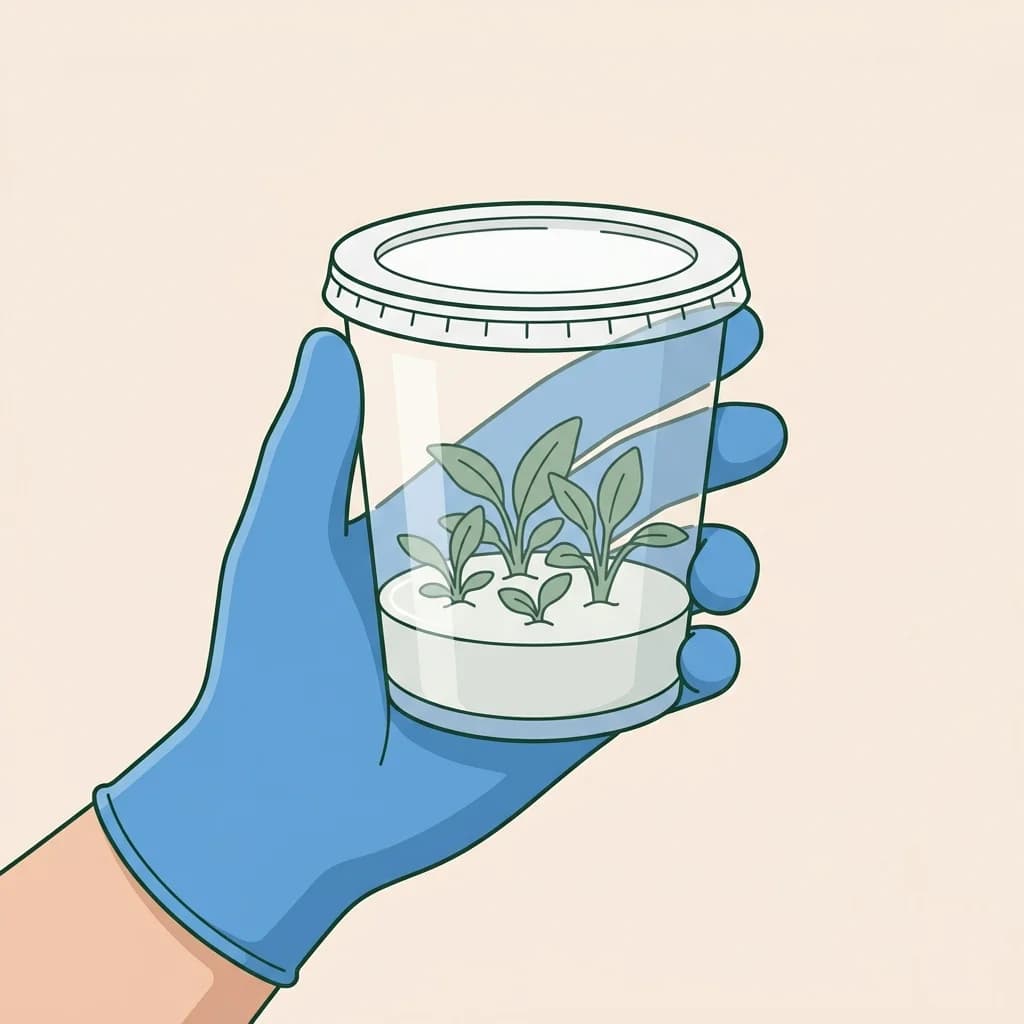
Vessel Completely Secured
Gel is solid at the bottom; leaves are clean. Place vessel in indirect grow light for **24 to 48 hours** to rest before deflasking.
Rough Transit Damage
Gel is scrambled like a snowglobe, coating leaves. **Do not rest!** Deflask and rinse leaves immediately to prevent leaf suffocation.
Visible Contamination
White fuzzy mold or pink spots visible inside. **Keep sealed!** Take clear photos and contact [email protected] within **24 hours**.
What Tools and Checklist Do You Need for Acclimation?
Do not open your tissue culture container until your workspace is perfectly prepped. Once the plant is exposed to ambient air, the clock starts.
Pre-Deflasking Preparation Checklist
Expand this checklist to check off your sterile setup.
What is the Best Substrate for Tissue Culture Acclimation?
Do not use standard potting soil! It is too heavy, holds too much water, and carries lethal pathogens. Choose one of the following sterile propagation mediums:
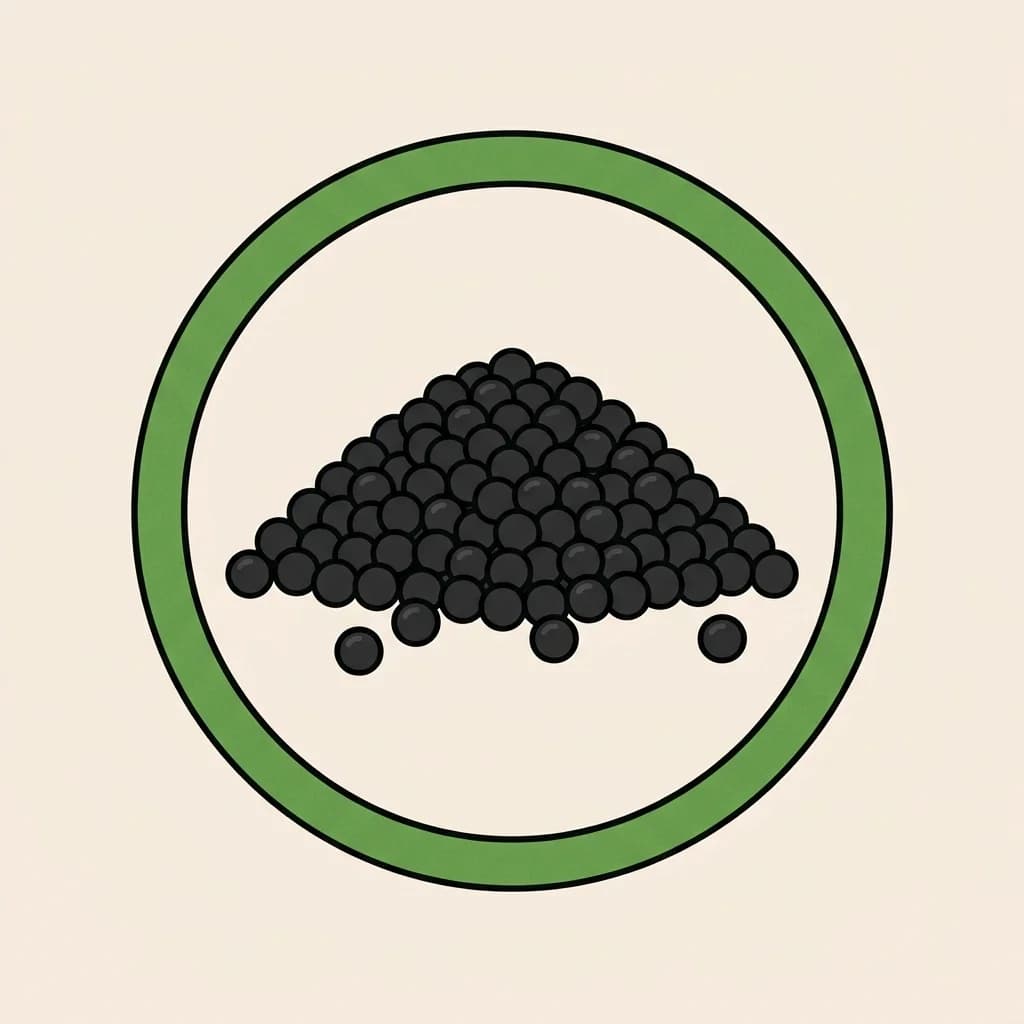
1. Fluval Stratum
A baked volcanic ash aquarium soil. Perfectly spherical, providing massive airflow to delicate micro-roots. Slightly acidic and holds clean moisture without muddying. Highly recommended for Monsteras, Philodendrons, Alocasias, and Bananas.
2. Moss & Perlite (50/50)
Premium long-fiber Chilean Sphagnum moss blended with coarse perlite. Incredible for retaining high ambient humidity. Great for Anthuriums, Begonias, and Ferns. Must be wrung out completely so it is only slightly damp before potting.
3. Chunky Perlite & Pumice
100% sterile mineral mix that offers exceptional gas-exchange. Ideal for setting up a shallow distilled water reservoir at the bottom of propagation cups.
4. Tree Fern Fiber
Natural biophilic organic material providing superb drainage and natural antifungal properties. The professional choice for Syngoniums and Anthuriums.
Interactive Substrate “Squeeze Test” Simulator
Click the buttons below to squeeze the Sphagnum moss handful. Seeing the exact physical drip count and moisture states clarifies the moist-but-not-wet rule perfectly.
❌ Too Wet (Soggy): Heavy streams of droplets squeeze out of the moss. This leaves zero air pocket spaces for the sensitive roots to breathe, starving them of oxygen and causing root-rot inside 24 hours.
✅ Optimal Damp (Squeezed Sponge): When squeezed hard, exactly **one single water droplet** escapes, and the moss clump retains its compressed shape without crumbling. This represents the perfect oxygen-to-water balance.
⚠️ Too Dry (Bone Dry): No droplets release, and the moss clump is crumbly and falls apart. Baby tissue culture roots will immediately shrivel and dry up.
How Do You Deflask Tissue Culture Plantlets Step-by-Step?
Agar gel is packed with sugars and hormones. Outside the lab, it acts as a magnet for mold. Follow this strict deflasking timeline:
Extraction & The Wash (Critical Step)
Using sterilized tweezers, gently extract the plantlets from the flask. Submerge roots in lukewarm distilled water, and massage gently with your fingers or a soft paintbrush to remove every single speck of gel. Gel remnants will trigger massive rot blooms.
Separation (Submerged)
If the vessel contains multiple plantlets, gently pull them apart while submerged in the water. The water acts as a natural lubricant, minimizing root damage. If they are tangled tightly, do not force them; plant as a clump and divide later.
The Preventative Soak
Submerge the entire clean plantlet (leaves and roots) in your prepared Hydrogen Peroxide (1:9 dilution of 3% H2O2) or contact fungicide solution. Soak for 1 to 2 minutes to establish a clean protective boundary on leaf surfaces against ambient air spores without chemically burning the delicate leaves.
Crown-Safe Potting
Pre-moisten your substrate and squeeze out all excess moisture until it is lightly damp like a wrung sponge. Plant roots gently. CRUCIAL RULE: Do not bury the stem, petioles, or crown (where leaves meet roots). Crown burial leads to immediate rot. Use a toothpick to prop up top-heavy plantlets.
Sealing the Microclimate
Place the potted specimen immediately inside a clean humidity dome or sealed storage container to lock in 100% relative humidity. Place under grow lights in a warm, sheltered location. Never place in direct window sunlight, as this greenhouse effect will boil your plantlets in minutes.
🚨 The Absolute #1 Golden Rule: Planting Depth
Burying the “Crown” (the exact point where the leaf stems meet the root zone) is the most common cause of tissue culture death. Substrate moisture sitting against the tender petioles will rot them in hours. Study the cross-sections carefully:
✅ THE GOLDEN RULE (CROWN ABOVE LINE)
Only the hair-thin roots are buried in the substrate. The fleshy petiole bases and stem sit fully exposed to air above the soil line, keeping them dry and rot-free.
❌ BURIED PETIOLES (ROT BLOWOUT)
Substrate covers the crown. Water is trapped in the stem crevices, inviting lethal damping-off fungus that causes the entire plantlet to melt overnight.
How Do You Acclimate Specific Plant Genera?
Not all tissue cultures are created equal. Tailoring your substrate, heat, and venting to the specific plant genus is the absolute key to a 100% acclimation rate.
Monstera Care Requirements
Ideal Substrate
100% Fluval Stratum or a 50/50 mix of Sphagnum Moss and very chunky Perlite/Pumice.
Specific Quirks & Tips
The "Rot" Risk
Monsteras develop thick, fleshy roots that demand oxygen. Their biggest enemy is substrate that is too densely packed or soaking wet.
Variegation Warning
Highly variegated varieties (especially the Thai Constellation and Albo) have significant white segments lacking chlorophyll. This makes them highly prone to stem rot during acclimation. Keep substrate drier and mix incredibly airy.
Planting Depth
Never bury the petiole base (where leaf stem meets main vine). Stem must sit above the moisture line.
How Long Does Tissue Culture Acclimation Take?
This is the progressive process of training stomata to close and leaves to build waxy cuticles.
Select your deflasking date to automatically calculate and highlight your exact acclimation stage today (today).
📬 Progressive Stage Email Reminders
Receive automated notifications exactly when it is time to open your vents halfway, crack the dome, or remove it entirely.
Incubation
Keep the dome 100% sealed. Do not open except to spot-treat mold or burp airflow-loving plants. Let the plant push out its first soil roots.

🔄 Important: Acclimation is a Dynamic Cycle (Not a One-Way Street!)
Plant stomata adaptation is a physical muscle response. If leaves curl, droop, or lose turgidity at any stage of this timeline: immediately drop back one step, reseal the dome vents, mist the inside walls, and extend that phase by an extra week before trying to vent again.
How Do You Fix Common Tissue Culture Problems?
Even experts face setbacks. Here is how to read your plant's SOS signals and fix common TC problems before it is too late:
📖 Key Diagnostic Takeaways: Acclimatization Stress Management
Generative botanical consensus confirms that tissue culture plantlets lack protective waxy cuticles and possess unhardened stomatal pores. During the first two weeks of ex vitro acclimation, plants undergo significant physiological stress. To optimize survival:
- 1. Dropping LeavesHumidity dropped too fast. Intervene immediately by sealing vents, misting walls, and maintaining 100% relative humidity for 48 hours.
- 2. Mushy Lower LeavesNormal leaf senescence. laboratory-grown foliage naturally dies off to allocate energy to new roots. Use sterile scissors to prune to avoid pathogens.
- 3. Soil Soggy + YellowingAnaerobic root rot. Poor oxygenation suffocates roots. Stop watering immediately, check the nursery cup, and transition to drier, aerated potting substrate.
Rapid Diagnostic Protocol for Acclimatization Stress
Follow the physical signs shown by your plantlets to discover the correct stabilization pathway. Select a symptom below to isolate its path.
Humidity Dropped Too Fast
The ambient vapor pressure deficit (VPD) shifted too quickly, causing lazy stomata to lose water faster than roots can absorb it.
Close vents, mist, wait 48 hrs
Immediately close all vents on the dome. Mist the intensive walls of the dome (not the plant directly) and wait 48 hours to restore turgor pressure.
Normal In Vitro Leaf Senescence
Standard biological transition. The plantlet reabsorbs nutrients from weak lab leaves to build brand new, hardened roots.
Remove with sterile scissors, seal dome
Gently open the dome, prune the mushy leaf at its base with 70% alcohol sterilized scissors to prevent mold, and immediately reseal the dome.
Anaerobic Root Rot
Excess water blocks oxygen flow to the root zone, allowing anaerobic fungal pathogens to rot transitioning roots.
Cease watering, check roots, dry media
Stop watering immediately. Check the clear nursery pot; if roots are black/mushy, gently trim them and repot in drier, aerated media.
Mushy Melting Leaves
Lethal Cause
Bacterial or fungal rot. This is triggered by substrate that is completely soaking wet, crown burial, or residual agar gel left on the roots.
SOS Rescue Protocol
Act fast! Rot spreads in hours. Use sterile scissors to cut off mushy leaves. Extract the plantlet, soak it in a diluted Hydrogen Peroxide solution for 1 to 2 minutes, and repot in entirely fresh, significantly drier substrate. Check planting depth!
When is Your Plant Ready for Permanent Soil?
When to Fertilize?
Never fertilize a fresh TC plantlet. Chemical salts will severely burn unadapted roots. Wait until the plant has fully acclimated to household room humidity and pushed out at least two brand-new leaves. Then, apply a heavily diluted (1/4 strength) liquid organic houseplant fertilizer. (Note: Fluval Stratum has mild built-in nutrients, so you can wait even longer).
Repotting into Soil
Do not rush to repot! Wait until the plant has fully outgrown its acclimation cup and has a thick, visible root system wrapping around the inside of the container (usually 2 to 4 months). When transitioning to soil, use a highly chunky, well-draining mix. Do not put a tiny 2-inch plant into a massive 6-inch pot, or excess wet soil will drown it.
Mega FAQ Section
Tissue Culture Glossary of Terms
The gelatinous, semi-solid substance at the bottom of the flask. Made from seaweed, it is infused with the exact sugars, nutrients, and hormones the plant needs to grow in the lab.
Latin for "in the glass." Refers to the plant's life inside the sterile laboratory vessel.
Latin for "outside the glass." Refers to the plant's life in the real world after opening the container.
The transitional process of moving a plant from in vitro to ex vitro.
The difference between the amount of moisture in the air and how much moisture the air can hold. Large fluctuations in VPD cause severe stress for TC plants.
The microscopic pores on a plant's leaf that open and close to breathe and release moisture. TC plants have to "re-learn" how to close their stomata.
The waxy outer layer on a plant leaf that protects it from drying out. TC plants do not have this yet.
Short for "contamination." Refers to unwanted mold, fungus, or bacteria growing on the agar inside the flask.
A rapid, lethal fungal disease caused by burying the stem or overly wet conditions. It rots the stem right at the soil line, causing the plant to fall over and die.
A swollen, underground plant stem that stores energy (common in Alocasias).
The original microscopic cluster of cells or plant tissue that was used to clone and grow the tissue culture plant in the lab.
New growth or an entirely new baby plant emerging from the base of the main stem.
The small stalk that attaches a leaf blade to the main stem.
Fine, hair-like appendages on leaves (like on Platycerium) used for moisture absorption and protection.
The natural circadian rhythm response where a plant folds its leaves up at night (common in Calatheas).